5,000 Years of History
Walk among the ruins of one of the world's oldest urban civilizations, where sophisticated cities thrived millennia before Rome—a journey to humanity's early mastery of engineering, trade, and art.
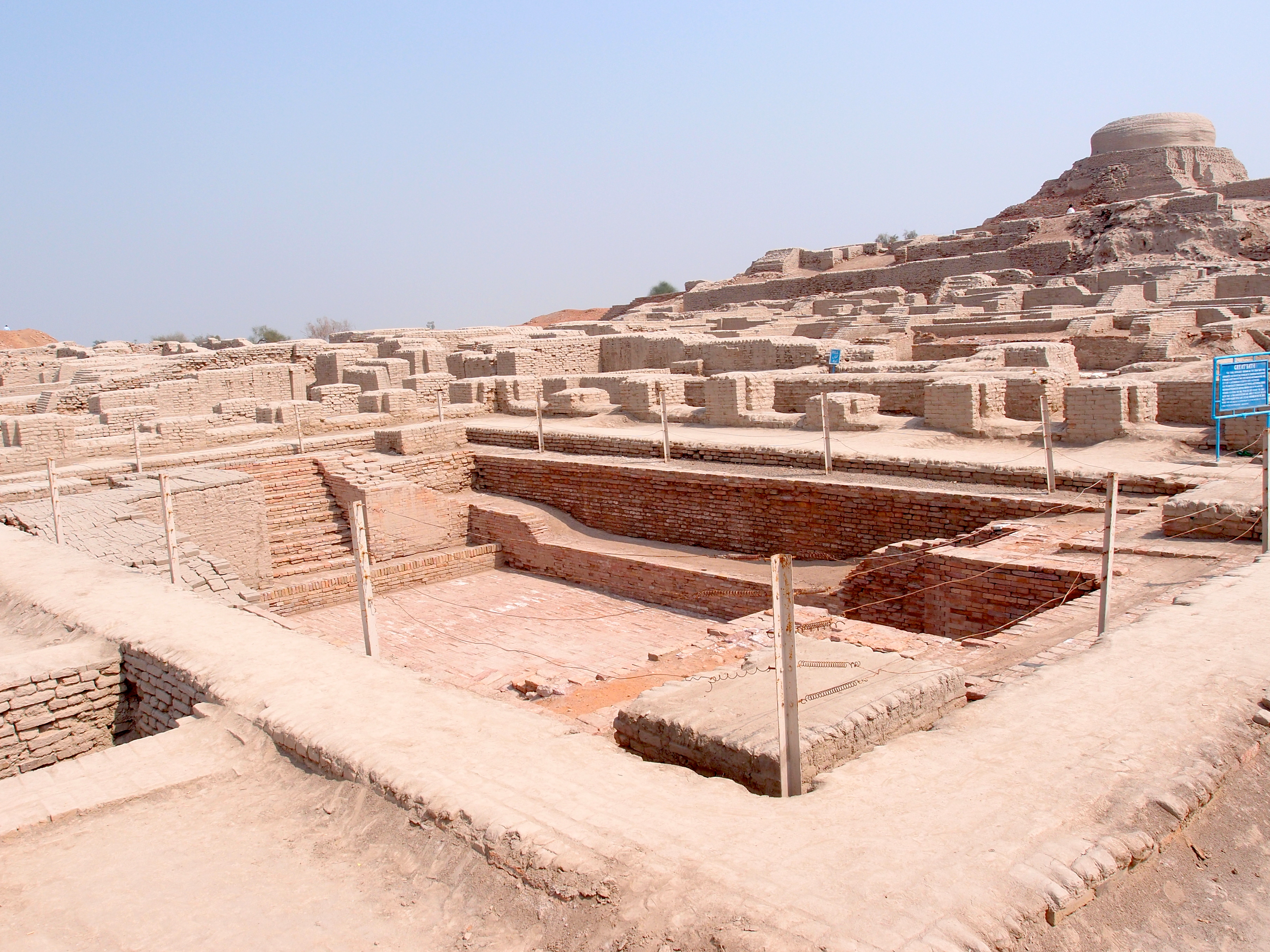
Between 3300 and 1300 BCE, while Egypt built its pyramids and Mesopotamia its ziggurats, the Indus Valley Civilization flourished across what is now Pakistan and northwest India. This was no primitive society—cities like Mohenjo-daro and Harappa featured grid-planned streets, sophisticated drainage systems, standardized bricks, public baths, and evidence of long-distance trade from Afghanistan to Mesopotamia. Yet unlike their contemporaries, the Harappans left no monumental temples or palaces, no boastful king inscriptions—just the elegant functionality of urban life at its dawn.
Over 4,000 inscribed seals and tablets have been found, yet the Indus script remains undeciphered. Was it a language, a proto-writing system, or something else? Standing before these seals is to face one of archaeology's greatest puzzles.
The Harappans built cities with covered drainage systems, public baths, standardized weights, and modular bricks—engineering feats that rival or surpass contemporary civilizations. Their egalitarian city layouts suggest a society unlike the hierarchical kingdoms of Egypt or Mesopotamia.
Indus beads have been found in Mesopotamian royal tombs, and Mesopotamian texts mention trade with "Meluhha" (likely the Indus region). Carnelian, lapis lazuli, copper, and cotton textiles moved along ancient trade routes, making this a truly international civilization.
Around 1900 BCE, the cities began to decline. Climate change? River shifts? Invasion? Epidemics? The mystery of why this sophisticated civilization ended adds poignancy to walking through its ruins—a reminder that even great cultures are not eternal.
At Mohenjo-daro: A full day exploring the excavated city, the museum, and the interpretation center. The site is best visited October–March to avoid Sindh's extreme summer heat. We arrange expert archaeological guides who bring the silent ruins to life with context, stories, and the latest research findings.
At Harappa: Half to full day, combined easily with visits to Lahore (3 hours away). The site is less excavated than Mohenjo-daro but equally significant, and the museum is excellent. The surrounding Punjab countryside offers a glimpse of rural Pakistan.
Combined Heritage Tours: We often combine Indus Valley sites with other heritage destinations—Multan (Sufi shrines), Lahore (Mughal architecture), or even Taxila (Buddhist Gandhara sites)—for travelers seeking a comprehensive journey through Pakistan's layered history.
Visiting Indus Valley sites is not just about ancient stones. You'll travel through the vibrant provinces of Sindh and Punjab—sampling regional cuisines (Sindhi biryani, saag and makki ki roti), experiencing the warmth of Pakistani hospitality, and seeing how modern life continues alongside ancient heritage. The Indus River itself, which gave rise to this civilization, remains the lifeblood of Pakistan, connecting past and present in a single, mighty flow.
The Indus Valley Civilization challenges our assumptions about early human societies. It was vast (larger in extent than Egypt or Mesopotamia), sophisticated, and apparently peaceful (few weapons found, no depictions of warfare or kings). Yet it's far less famous than its contemporaries, partly because the script remains unread and partly because archaeology here began only in the 1920s. To visit these sites is to encounter a civilization that was overlooked for centuries—and to witness ongoing discoveries that continue to rewrite history.