
The Gandhara Civilization
Journey through the ancient kingdom where Buddhism flourished for a thousand years, Greek artistic traditions merged with Eastern philosophy, and pilgrims walked the Silk Road seeking enlightenment.
Between the 6th century BCE and the 11th century CE, the region now comprising northern Pakistan and eastern Afghanistan was a thriving center of Buddhist learning, art, and pilgrimage. Known as Gandhara, this crossroads of civilizations saw the fusion of Greek artistic techniques (brought by Alexander the Great's conquests) with Buddhist iconography—resulting in the first anthropomorphic images of the Buddha. Chinese pilgrims like Xuanzang and Faxian journeyed here to study at great monasteries, collect sacred texts, and visit sites associated with the Buddha's previous lives. Today, Pakistan holds one of the world's richest collections of Buddhist archaeological sites, many recognized as UNESCO World Heritage Sites.
Gandhara art uniquely blends Hellenistic realism with Buddhist iconography. Buddhas wear Greek-style robes (with naturalistic drapery folds), display contrapposto poses, and are accompanied by Corinthian columns and acanthus leaves. This synthesis created the visual language that spread with Buddhism to China, Korea, and Japan.
Early Buddhist art avoided depicting the Buddha directly, using symbols (footprints, empty thrones, Bodhi trees). Gandhara artists, influenced by Greek anthropomorphic traditions, created the first human images of the Buddha—establishing iconographic features (ushnisha head bump, elongated earlobes, urna forehead mark) still used today.
Gandhara reliefs tell stories—the Buddha's birth, enlightenment, first sermon, and parinirvana (death), along with Jataka tales of his previous lives. These narrative panels functioned as visual teachings for pilgrims and monastics, bringing Buddhist texts to life in stone.
Gandhara stupas evolved from simple hemispherical mounds to elaborate structures with decorated bases, multiple tiers, and surrounding chapels. Monasteries developed standardized layouts—central courtyard, monks' cells, assembly halls, stupa courts—influencing Buddhist architecture across Asia.
Gandhara was a crucial node on the ancient Silk Road network. Buddhism spread from India to Central Asia, China, and beyond through these routes, carried by merchants, missionaries, and pilgrims. Monasteries served as rest stops, libraries, and centers of learning. The Kushan Empire (1st-3rd centuries CE), which ruled Gandhara at its Buddhist peak, facilitated this exchange—its coins featured Greek gods, Persian titles, and Indian scripts, embodying the region's cosmopolitan culture.
Chinese pilgrims left invaluable records of their journeys. Faxian (399-412 CE) and Xuanzang (629-645 CE) described thriving monasteries, relic stupas, and Buddhist kingdoms in what is now Pakistan. Their accounts help archaeologists identify sites and understand the religious landscape of ancient Gandhara.
Taxila Tour: A full day is recommended to visit the main sites (Dharmarajika, Jaulian, Mohra Muradu) and the museum. The sites are spread across the Taxila valley, requiring vehicle transport between them. Expect archaeological ruins (foundations, stupas, sculptures in situ) rather than standing buildings. Expert guides are essential to understand the complex history and significance.
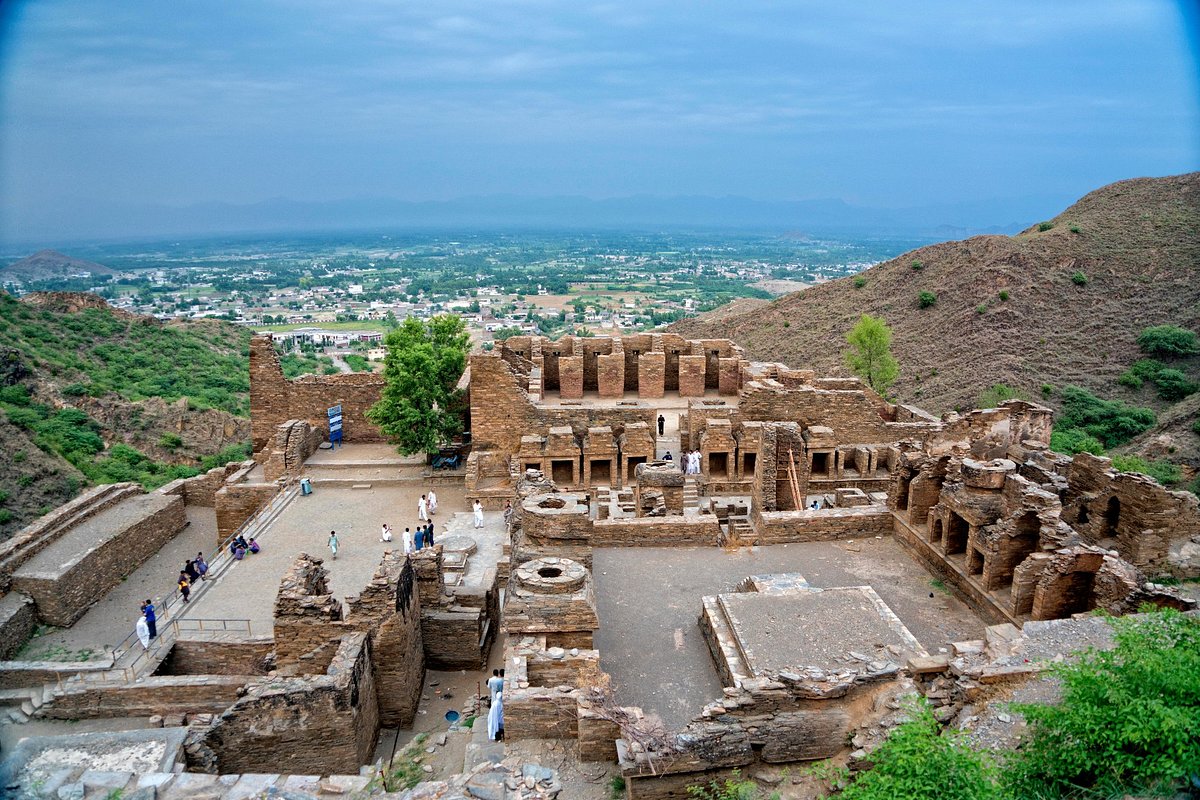
Takht-i-Bahi: Half day, can be combined with visits to other sites in the Peshawar region. The hilltop location means some climbing but rewards with panoramic views. The preservation is exceptional, giving a clear sense of monastery layout and daily life.
Swat Valley Buddhist Circuit: Two to three days to explore multiple sites, the museum, and enjoy the valley's natural beauty. Swat combines heritage tourism with mountain scenery, traditional villages, and adventure opportunities (hiking, river rafting).
Best Season: October to April for comfortable weather. Summer can be hot in Taxila and Takht-i-Bahi, though Swat remains pleasant due to elevation.
Pakistan's Buddhist heritage faces challenges—looting (many Gandhara sculptures ended up in international collections through illegal antiquities trade), environmental erosion, and insufficient funding for conservation. However, recent initiatives by the Pakistani government, UNESCO, international donors, and local communities show growing commitment to preservation. Tourism that respects sites and supports conservation is welcomed.
For Buddhist visitors, these sites offer profound pilgrimage opportunities—walking where the Buddha's teachings once resonated through monastery halls, seeing the earliest images of the Enlightened One, and connecting with the historical spread of Dharma across Asia.
Gandhara heritage tourism requires expert interpretation—silent ruins need context, fragmentary sculptures need explanation, and the complex history of invasions, empires, and religious shifts can be bewildering without guidance. We work with leading archaeologists and historians who bring these sites to life, arrange all logistics and permissions, and can connect Buddhist pilgrims with local communities and scholars. We also combine Buddhist heritage with other facets of Pakistan—staying in Swat's mountain valleys, experiencing Peshawar's bazaars, or linking with Mughal Lahore—for a comprehensive journey.